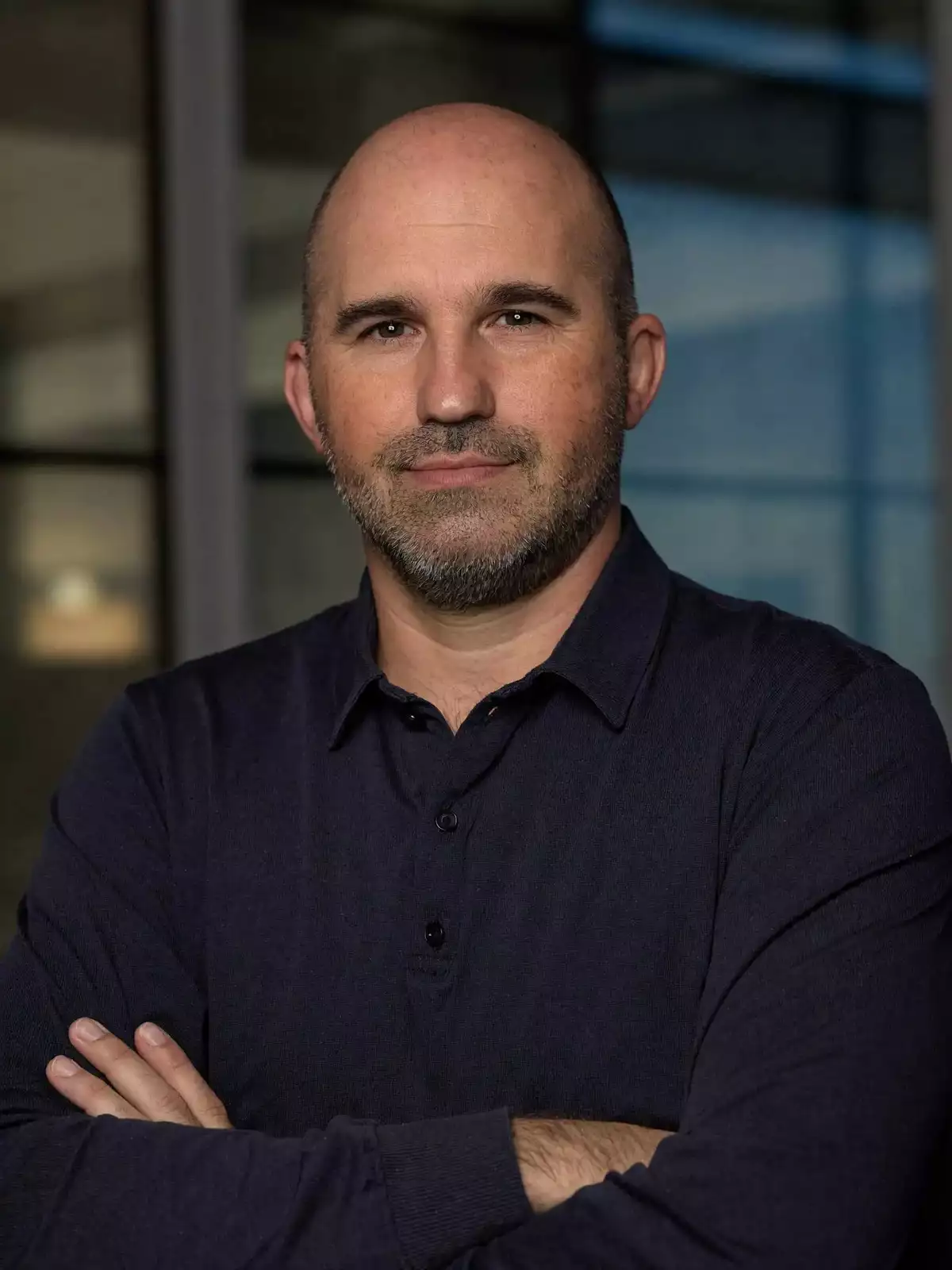

Technically reviewed by Vitaly Ogulev, founder of Netcomp Solutions (Brisbane managed IT and cyber security since 2002).
Australian businesses face a cybersecurity crisis unlike anything before, and the numbers make uncomfortable reading. According to the OAIC, data breach notifications hit an all-time high of 1,205 in 2025. That figure represents an 8% increase on 2024. Behind many of those breaches sits a force that is rapidly rewriting the rules: artificial intelligence. For Brisbane and Gold Coast small and medium businesses, AI cyber threats in Australia are no longer a distant concern. Nor do they only target large corporations. Instead, they arrive in your inbox, target your staff, and exploit gaps you may not know you have. This article explains what is happening and what it looks like in practice. It also shows what you can do about it without an enterprise-sized budget.
How AI Is Changing the Cyber Threat Landscape for Australian SMBs
Not long ago, staff could spot phishing emails relatively easily. Clumsy grammar, strange formatting and implausible scenarios gave them away. AI has changed that calculus entirely. Cybercriminals now use large language models to write highly convincing, relevant messages. These messages read like genuine correspondence from your bank, the ATO or a trusted supplier. In fact, a Fortinet-commissioned IDC survey found 51% of surveyed Australian organisations faced AI-powered threats in the past year. Moreover, 76% reported that these threats had doubled. This is not a slow-moving shift. It is an acceleration.
For SMBs in Brisbane and on the Gold Coast, the practical implications are significant. You may have fewer security resources than a major bank or government department. However, attackers do not choose targets by company size. They choose them by opportunity. AI tools let criminals automate reconnaissance, personalise attacks at scale and probe defences continuously. Previously, the manual effort involved limited how much they could do. Now, automated systems can run around the clock and do the work of a skilled human attacker.
The cost is real, too. The Australian Signals Directorate’s Annual Cyber Threat Report 2024–25 puts the average small business cybercrime cost at $56,600. That is a 14% rise on the previous year. As a result, the gap between attacker capability and SMB preparedness has widened considerably. Understanding the specific attack types aimed at Australian businesses is the first step toward closing that gap.
What AI-Powered Attacks Actually Look Like
AI-powered attacks take several distinct forms. Each one is worth understanding on its own terms.
AI-generated phishing and business email compromise pose the most immediate threat for most SMBs. These messages mimic trusted institutions with precision. According to the ATO, scam reports during tax time 2025 rose 52% on the previous tax time. Furthermore, scammers delivered 97% of those scams by email. The ATO also disrupted more than 2,000 malicious phishing websites during tax time 2025 alone. That number shows the industrial scale of the infrastructure criminals use to impersonate trusted Australian institutions. Consider a Brisbane accounting firm or Gold Coast trade business that receives dozens of supplier emails daily. For them, a convincing fake payment request or credential-harvesting link is a serious exposure.
Deepfake voice and video fraud is an emerging concern, especially where staff routinely approve requests verbally. AI can now clone a voice from a short audio sample. Criminals then use the clone to impersonate executives or clients in phone calls and video meetings.
Automated vulnerability scanning lets attackers probe thousands of systems at once without human intervention. These scans find unpatched software, misconfigured cloud storage and weak credentials. Therefore, an SMB that runs legacy software or relies on default settings faces a meaningful risk.
AI-assisted credential stuffing uses machine learning to speed up and target login attempts on business accounts. Attackers feed these tools username and password combinations stolen in earlier breaches. For this reason, multi-factor authentication is not just advisable but essential.
The Human Error Problem Is Getting Worse
Recent data highlights the role of human error, and AI is making this vulnerability more dangerous. According to the OAIC, human error caused 37% of reported breaches in the first half of 2025. In the previous six months, that figure was 29%. That rise is not a coincidence. As AI-generated phishing becomes indistinguishable from legitimate communication, it deceives even careful, trained employees.
The same OAIC report found that each cyber incident affected an average of just over 10,000 individuals. Consider an SMB that handles client records, financial data or health information. For that business, a single phishing click can trigger a notifiable data breach under the Privacy Act. Regulatory, reputational and financial consequences then follow.
Security awareness training therefore remains essential, but it cannot be your only line of defence. Instead, you need technical controls that limit the damage when a deception succeeds. Payment verification procedures help here. So do email authentication protocols such as DMARC and DKIM, and phishing-resistant multi-factor authentication. Together, these controls reduce the blast radius when an AI-crafted lure fools a staff member.
Shadow AI and the Internal Risk You May Not Have Considered

External AI-powered attacks dominate the headlines. Meanwhile, many Brisbane SMBs overlook an equally important internal risk: shadow AI. The term describes employees using AI tools without formal approval or governance. Typically, these are consumer platforms such as chatbots and generative writing assistants.
Imagine a staff member who pastes a client contract, financial record or sensitive email thread into a public AI tool. They usually just want to work faster. Yet that data may leave your environment, and the provider may use it to train external models. The intent is usually benign. Nevertheless, the consequence can be a serious data breach.
Addressing shadow AI requires three connected actions. First, use discovery tools to identify which AI applications staff access on your network. Second, set data-loss prevention policies that define what staff can and cannot share with external platforms. Third, adopt an acceptable-use governance framework that gives employees clear guidance. That way, staff find the answer to “can I use AI for this task?” in a documented policy.
Regulated sectors such as health and financial services face even higher privacy exposure. This applies equally to Brisbane and Gold Coast SMBs that serve clients in those industries. The OAIC reported that health service providers lodged 19% of all data breach notifications in 2025. Financial services ranked second, with 157 notifications. In those environments, shadow AI governance is not optional.
Cybersecurity Compliance in Australia: What SMBs Need to Put in Place
Historically, regulators and industry framed cybersecurity compliance in Australia around larger organisations. However, that is changing. Privacy Act reforms and the Notifiable Data Breaches scheme raise the stakes. At the same time, enterprise clients increasingly scrutinise the security of their supply chains. As a result, Australian cybersecurity compliance for SMBs is becoming a commercial and legal necessity. It is no longer just a best-practice aspiration.
Effective compliance against AI cyber threats is not a matter of ticking boxes on a policy document. Rather, it requires you to connect five elements into a coherent programme.
- Policies that define acceptable use of technology, including AI tools. Good policies also set clear expectations for staff.
- Technical controls that enforce those policies at a system level. Examples include endpoint detection and response, email filtering, MFA and network segmentation.
- Evidence collection through logging and monitoring. This lets you demonstrate compliance and detect incidents early.
- Regular testing, including phishing simulations, vulnerability assessments and penetration testing. Testing finds gaps before attackers do.
- Defined remediation processes that make sure your team actually fixes identified vulnerabilities. They should do so in a documented and timely manner.
A cyber compliance consultant in Brisbane can map your current state against a recognised framework. One example is the Australian Signals Directorate’s Essential Eight. The consultant can then identify your highest-priority gaps. Finally, they can build a roadmap that suits your business’s size and risk profile. The goal is not perfection from day one. Rather, it is a structured, improving posture that demonstrates due diligence and reduces real-world risk.
Practical Steps Brisbane and Gold Coast SMBs Can Take Now
AI cyber threats in Australia are evolving quickly. Fortunately, the foundational controls that reduce your exposure are well established. Businesses without large IT teams or security budgets can achieve the following steps.
- Implement strong MFA on all business accounts, particularly email, cloud services and financial platforms. SMS codes are better than nothing, but attackers can intercept them. Authenticator apps with number matching are stronger. Better still, phishing-resistant options such as passkeys or hardware security keys offer the best protection.
- Deploy DMARC, DKIM and SPF on your email domain. These protocols make it harder for criminals to impersonate your business in phishing campaigns against your clients and suppliers.
- Establish payment verification procedures before anyone changes supplier bank details or processes large transfers. Require a separate phone call to a known number to confirm each request. This single control defeats many business email compromise attacks.
- Conduct regular, realistic phishing simulations that match the quality of AI-generated lures. Staff who regularly see convincing fakes are better prepared. In contrast, staff who only see crude attempts are not.
- Audit your AI tool usage and create an acceptable-use policy. The policy should state which tools staff can use, for what purposes, and with what data.
- Review your incident response plan so it covers AI-assisted attacks. Include procedures for business email compromise, deepfake fraud and data exfiltration via cloud tools.
- Engage a cyber compliance consultant in Brisbane if you need external expertise. A consultant can assess your current controls and build your compliance framework. They can also prepare you for supply chain security assessments from larger clients.
The latest ATO scam data shows that email carried 98.6% of reported ATO impersonation scams in August 2026. Prioritising email security controls is therefore not simply prudent. Given the data, it is arguably the single highest-return security investment an SMB can make right now.
Conclusion: The Time to Act Is Before the Breach
AI cyber threats in Australia are not a future problem. They are a present one. The data from 2025 makes clear that attackers already have Australian SMBs in their crosshairs. That includes businesses in Brisbane and on the Gold Coast. Encouragingly, practical and proportionate defences exist. The businesses that fare best in 2026 will act now. They will strengthen email security and tighten governance around AI tool use. They will also connect compliance policies to real technical controls. Finally, they will equip staff to recognise and respond to sophisticated social engineering.
Are you unsure whether your current controls match the AI-powered threat environment? If so, Netcomp Solutions can help. We work with Brisbane and Gold Coast SMBs to assess cyber risk and implement the Essential Eight controls. We also build compliance programmes that are practical and proportionate. Contact our team today to discuss where your business stands. Together, we can work out what it needs to stay secure in 2026.
Frequently Asked Questions
What are AI-powered cyber threats and why do they matter for Australian SMBs?
AI-powered cyber threats use artificial intelligence to automate, personalise or scale malicious activity. Examples include AI-generated phishing emails, which are far more convincing than traditional fakes. Others include automated vulnerability scanning, AI-assisted credential stuffing and deepfake voice fraud. These threats matter because AI removes much of the manual effort that once limited attackers. As a result, attackers can now pursue far more targets at once. Small businesses therefore face attacks at a frequency and sophistication once reserved for larger organisations.
Is my Brisbane SMB required to comply with Australian cybersecurity laws?
It depends on your business. The Privacy Act 1988 and its Notifiable Data Breaches scheme cover businesses with annual turnover above $3 million. However, the OAIC confirms the Act also covers some smaller businesses, regardless of turnover. These include health service providers and businesses that trade in personal information. Covered businesses must notify the OAIC and affected individuals about breaches likely to cause serious harm. Your sector and client relationships may add further obligations. In addition, larger clients and government contractors increasingly ask SMB suppliers to demonstrate minimum security standards.
What is shadow AI and how does it create a data breach risk?
Shadow AI describes employees using AI tools without formal approval from the business. Common examples include public chatbots and generative writing assistants. The risk arises when staff paste sensitive business or client data into these tools. The provider may then use that input to train external models. Alternatively, it may store the data outside the business’s control. To address shadow AI, use discovery tools to find out what staff are using. Then add data-loss prevention policies and an acceptable-use governance framework that gives staff clear guidance.
How can a cyber compliance consultant in Brisbane help my business?
A cyber compliance consultant in Brisbane can assess your current security controls against a recognised framework. A common choice is the ASD’s Essential Eight. The consultant can then identify your highest-priority gaps against AI-powered threats. Next, they can build a remediation roadmap that suits your business size and budget. They can also set up the evidence collection and testing you need. That evidence demonstrates compliance to regulators, clients and insurers. Finally, a consultant provides ongoing support as the threat landscape evolves.